
Repeatable brilliance: what AWS asked Bango to tell the world about building with AI
By David Haughton, SVP Product & Technology, Bango
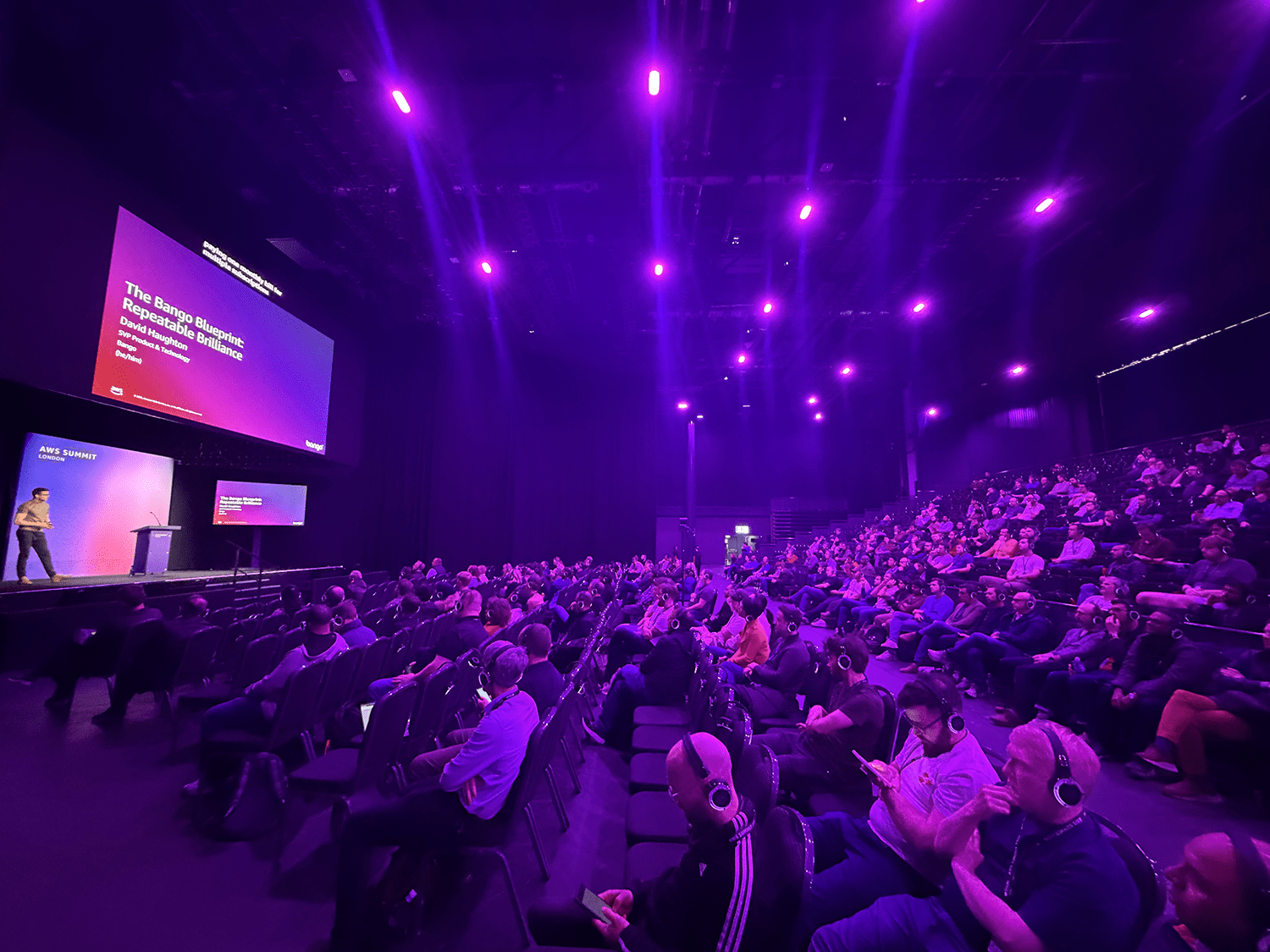
AWS invited Bango to present alongside its own architects at the AWS Summit 2026, because our approach to AI isn't just improving software development. It's increasing engineering capacity, accelerating customer delivery and strengthening the competitive advantage of the Bango platform.
The session explored how organizations move beyond experimenting with AI coding agents to embedding AI into software delivery. AWS wanted to showcase a customer doing this successfully at scale on a production platform trusted by global brands. Bango was that customer.
The problem most companies have with AI
AI only creates value when it changes how a business operates.
Every technology company now says it uses AI. In most cases, that means giving engineers access to coding assistants. Bango introduced AI development tools in late 2024, and today they're used across our product and engineering organization. But access to AI isn't an advantage on its own.
The real challenge is consistency. In most organizations, a small number of engineers achieve exceptional results while others see only modest improvements. That makes AI difficult to scale across a business and even harder to turn into a lasting competitive advantage.
At Bango, we've focused on making those exceptional results repeatable. Rather than relying on individual expertise, we've built a framework that captures how our teams work, embeds our engineering standards, and gives every AI interaction the context it needs to produce high-quality results. The outcome isn't simply better code - it's faster delivery, greater engineering capacity, and more time spent building new capabilities for customers.
That's why AWS invited Bango to speak. The story wasn't that we use AI. It was how we've turned AI into a systematic way of building better software, faster, on a platform trusted by some of the world's largest brands.
What we've delivered
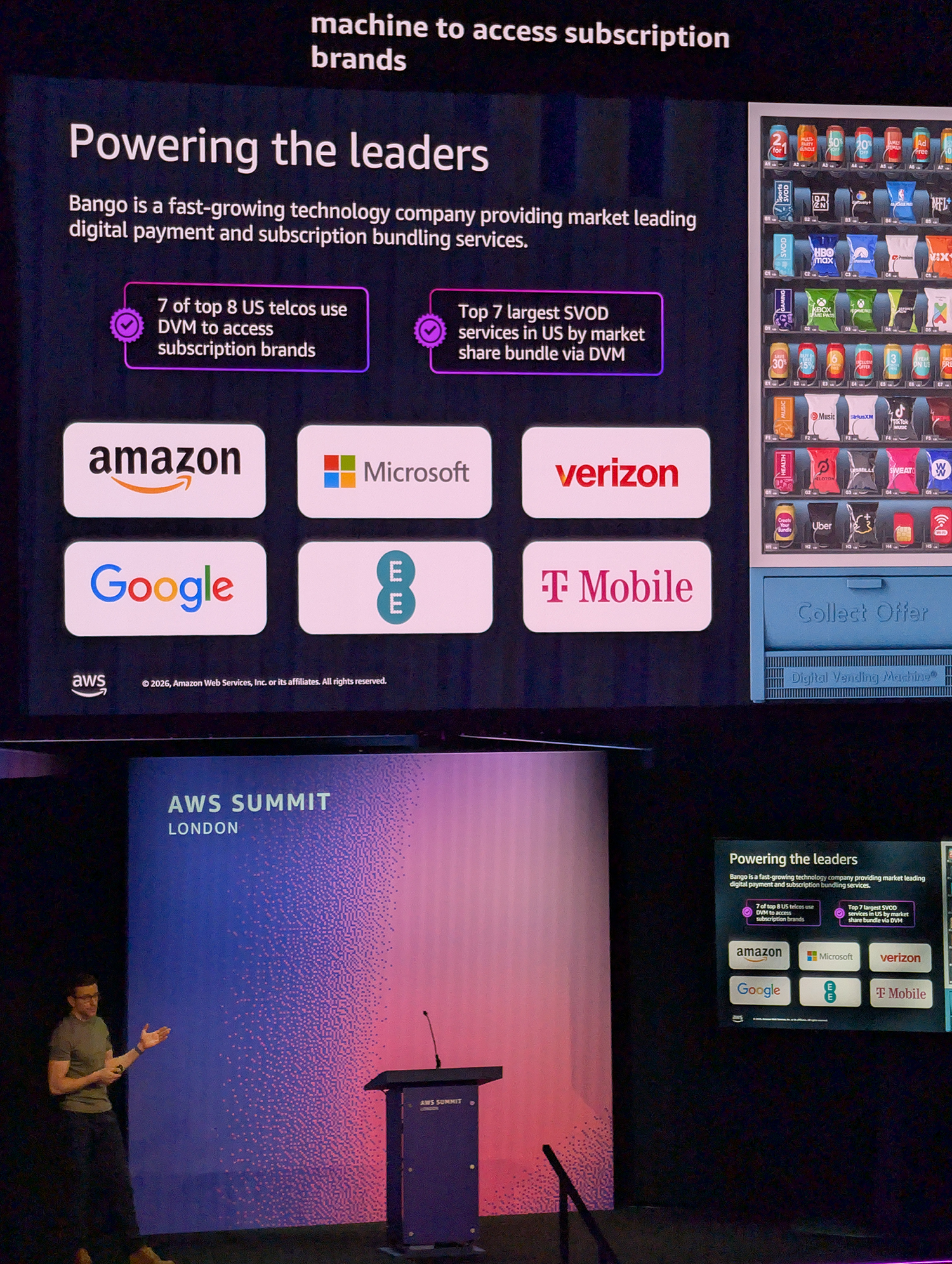
The Digital Vending Machine® from Bango, is a platform that powers subscription bundling for an increasing number of the worlds largest brands. Seven of the top eight US telcos and the seven largest US streaming services are part of the Bango ecosystem, along with more than 300 partners.
How has AI been deployed in the DVM?
An engineer delivered a complete automated integration testing framework in two weeks rather than months. A team with no frontend expertise shipped a working admin interface in three days. A new platform capability planned at thirteen weeks went live in seven, because AI absorbed the repetitive engineering work and our developers spent their time on edge cases and quality. Our SRE team now builds tooling that would not otherwise exist; the time to create it was never going to be found. Faster delivery of engineering infrastructure like this means new customer capabilities can be released sooner while maintaining quality.
The pattern is consistent: work that once took months now takes weeks. In some cases, capabilities where none previously existed. These aren't the four best stories from a pilot - They reflect a pattern we now see across teams.
It’s important to notice what kind of work it is. Nothing here bypassed our engineering standards. Every piece of AI-assisted work goes through the same peer review, testing and release gates as any other code, with a named engineer accountable for it. It's no accident the flagship example is a test suite. The biggest early wins have come in test coverage, automation and reliability - exactly the things our customers rely on us for.
The blueprint: making brilliance repeatable
Fast results from talented people are not a strategy. A system that makes those results normal is.
AI agents are knowledge-rich but context-poor. They know how to write software. What they don't know is Bango's architecture, our conventions, our domain or our standards - unless we teach them.
Our best results didn't come from harder work or cleverer prompting. They came from people who captured how they work - their context, their reading of our patterns and standards - so every session starts from there rather than from scratch.
We are now encoding that knowledge in layers across the business: shared standards for every team, domain knowledge for each part of the platform, and the specifics of individual projects. Written once. Version-controlled like code, peer-reviewed like code, and applied automatically to every AI interaction at Bango.
It compounds. Every improvement to that shared context improves everything that follows, for every engineer and every agent. A new team member starts from the accumulated expertise of the whole organization from day one. It's also the foundation autonomous agents need: as the industry moves from AI assistants to agents that complete work independently, the winners will be companies whose knowledge is already structured for machines to use. For our engineers, that shift points one way. As agents take on more of the routine, more of their time goes into innovation, designing what comes next and adding value to the platform for our partners instead of maintaining what already exists. We're building that foundation now, and we started early.
The effect
Our platform is cloud-native and purpose-built on AWS, with an event-sourced architecture and modular service domains. That re-platforming decision, made more than five years ago, is why AI multiplies our output instead of fighting our legacy. Clean architecture and structured context are the two ingredients that make AI productive. We have both.
The commercial translation is simple. Engineering capacity determines how many customer launches and new capabilities Bango can take on at once. All of this expands that capacity: more output from the team we have, and more room to grow. Integrations and improvements arrive quicker than before, in a market where telcos and subscription brands choose partners on speed and reliability of delivery this is a key differentiator.
And it's hard to replicate.
The advantage comes from the combination: a platform designed for this, and years of organizational knowledge captured where AI can use it. A competitor can buy the same tools tomorrow and get a fraction of the result; there's no shortcut through knowledge that first has to be untangled from a legacy estate. The gap widens as the tooling improves, because we built the machinery that turns better tools into better output.
Standing on that stage reinforced something we've believed for some time. The opportunity isn't simply to build software faster. It's to build a software business that compounds its expertise over time.
That's why we believe Bango isn't just adapting to this shift in how software gets built. We're helping define it.
By increasing engineering capacity without increasing complexity at the same rate, we're able to deliver more innovation, more customer integrations and greater long-term value from the Bango platform.